A dining chair gets more use than almost any other piece in the house. It's where breakfast happens in a rush and dinner parties stretch past midnight, where homework gets done and coffee goes cold. So the material you choose matters more than it first appears, not just for how the room looks but for how the chairs hold up to the life around your table.
Most dining chairs come down to three families: leather, upholstered fabric, and wood. Each has real strengths and honest tradeoffs, and this dining chair buying guide walks through them so you can choose with confidence.
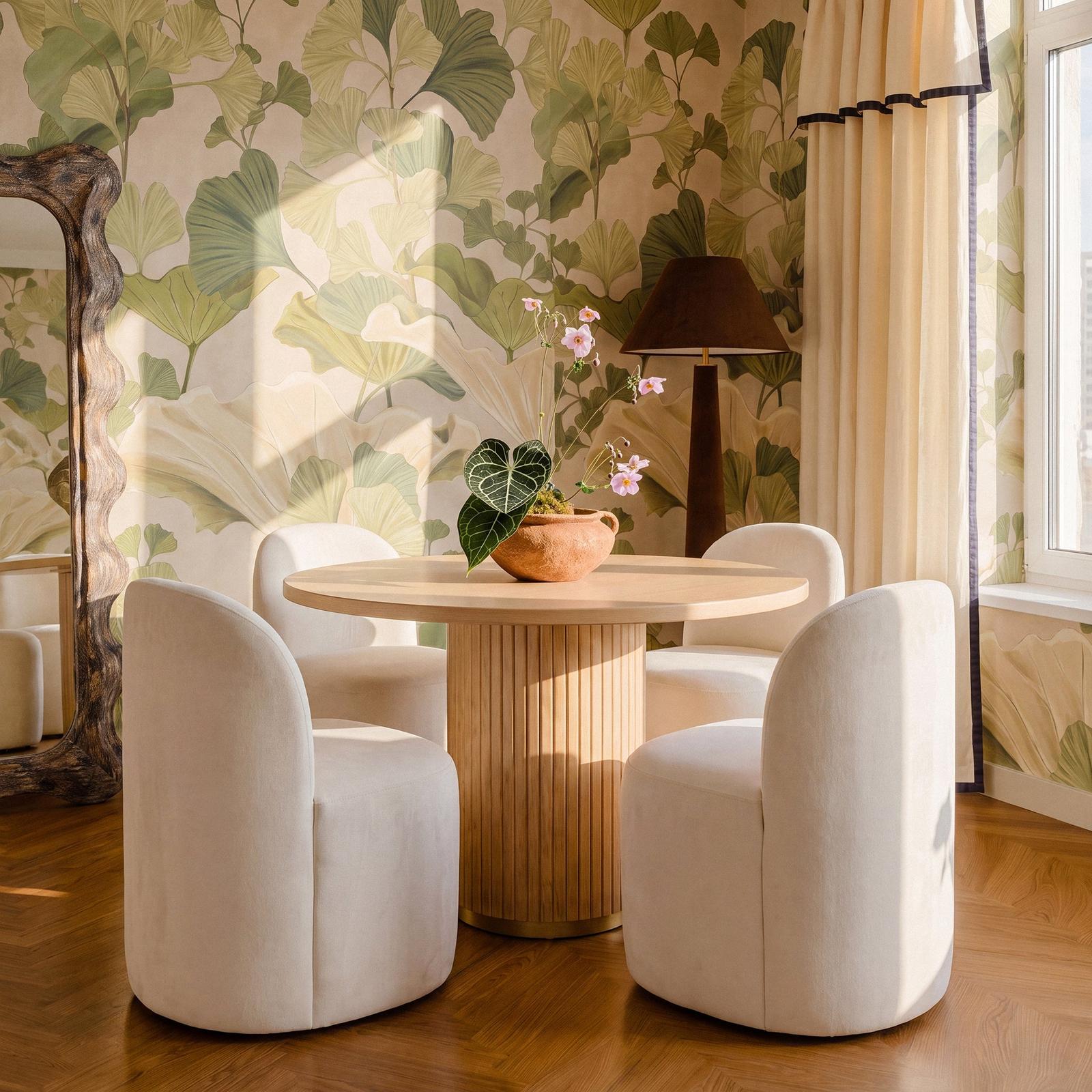
Leather: Polished, Practical, And Better With Age
Leather is the choice for people who want a tailored look that's easy to keep clean. Spills wipe off rather than soak in, crumbs brush away, and good leather develops a patina that makes it look richer each year rather than worn.
The Classic Home Kester Dining Chair shows the appeal well: supple top-grain leather on a handcrafted hammered iron frame, in Tan or Jet Black. At 19.5" W x 22.5" D x 33" H with a 19.5-inch seat height, it's slim enough to fit comfortably around most tables. For a warmer, more traditional pairing, the Mercana Abbie Dining Side Chair sets a tan leather seat on a brown wood frame with tapered legs.
Best for: families who want easy cleanup and anyone who likes a material that ages gracefully.
Keep in mind: leather can feel cool in winter and warm in summer, and sharp objects or pet claws will mark it. Keep it out of direct sun and condition it once or twice a year.
Upholstered: The Most Comfortable Seat At The Table
If your dinners tend to linger, upholstered chairs are hard to beat. A padded seat and back invite people to stay, and fabric opens up color and texture in a way leather and wood can't.
The worry used to be stains, but performance fabrics have changed that. The TOV Furniture Persa Dining Chair, in a soft performance chenille with a rounded back, is designed to resist everyday spills while feeling generous to sit in. It measures 25" W x 22" D x 32.5" H with a 20-inch seat height and a roomy 21.5-inch seat width.
Best for: long dinners, formal dining rooms, and anyone who puts comfort first.
Keep in mind: blot spills promptly, vacuum the seat now and then, and check the cleaning code before using any product. Wider upholstered chairs also take up more room at the table, which matters in the next section.
Wood: Timeless, Sturdy, And Endlessly Versatile
Wood chairs are the workhorses of the dining room. They're durable, easy to wipe down, and visually light, which makes a smaller dining area feel more open. They also work in almost any style, from farmhouse to modern.
The Essentials For Living Hearth Dining Chair pairs a contoured solid rubberwood seat with a wishbone back and sturdy leg stretchers in Natural Gray or Sable. It measures 20" W x 21.5" D x 31.5" H, with an 18.75-inch seat height. For something with more texture, the Four Hands Buxton Dining Chair updates the classic whistler chair in solid oak, finished with a paper rush wrapped detail across the back.
Best for: busy households, kitchen dining, and smaller rooms.
Keep in mind: a solid wood seat is firmer than upholstery. A seat cushion adds comfort if you linger, and felt pads under the legs protect your floors.
Get The Size Right Before You Choose
Whatever the material, the chair has to fit both the table and the people at it. Three numbers matter most:
-
Seat height to tabletop: most dining tables are 29 to 30 inches tall, and the gap between seat and tabletop should be about 10 to 12 inches. That's why most dining chairs, including every chair above, have seat heights between about 18 and 20 inches.
-
Width per chair: allow about 24 inches of table length per diner, and more for wider chairs. The 25-inch Persa needs closer to 28 inches each, while the 19.5-inch Kester fits comfortably in 24.
-
Room to pull out: leave at least 36 inches between the table edge and the nearest wall or furniture so chairs can slide back without a squeeze.
If you're choosing arm chairs, check that the arms clear the table's apron so the chairs can tuck in.
Mixing Materials
You don't have to pick only one. A popular approach is wood or leather side chairs along the table with a pair of upholstered chairs at each end, which adds comfort where the hosts sit and gives the table a more collected look. Keep seat heights within an inch of each other so the table still reads as one set.
Choose The Way You Dine
Leather suits households that want polish and easy care. Upholstery suits long dinners and formal rooms. Wood suits busy, everyday tables and smaller spaces. Measure your table and room first, then pick the material that fits how you actually live. Browse our dining chairs to find the right fit for your table.
Frequently Asked Questions
Which dining chair material is easiest to clean?
Leather and wood are the easiest; both wipe clean with a damp cloth. Performance fabrics have narrowed the gap for upholstered chairs, but they still need prompt blotting.
What seat height should a dining chair have?
For a standard 29 to 30 inch table, look for a seat height of about 18 to 20 inches, which leaves 10 to 12 inches between the seat and the tabletop.
How much space does each dining chair need?
Allow about 24 inches of table length per chair, more for wide upholstered chairs, and at least 36 inches behind each chair to pull it out.