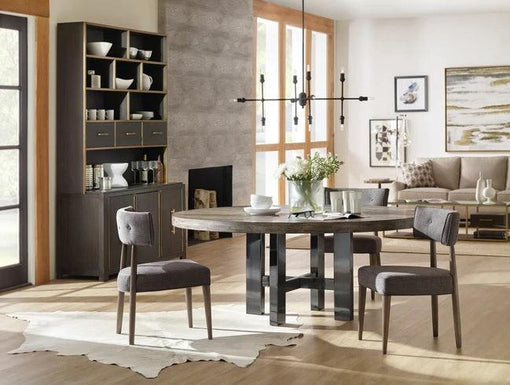
The dining room is probably one of the most crucial rooms in a house to decorate. It is nothing but a general and straightforward design process with a few pieces of dining furniture needed. By getting the right style and size of furniture for your dining space you can give the whole area a totally new look with no extra effort. So, if you want to make sure that you, your family members, and your visitors experience comfort and beauty in your dining area then you are at the right piece of information. We have got a guide for you about how to style your dining room with the available ranges and styles of dining furniture.Hooker Furniture Curata Round Dining Table
Dining Tables
Dining tables form an integral part of the dining furniture. One must keep in mind the size of the dining room and the number of persons to be seated while buying a dining table. Dining tables come in various sizes, styles, and patterns and can be chosen and bought according to the requirement. The various kinds of dining tables include buffets, tabletop decor and hutches, rectangular tables, tables with glass tops, round tables, and even more.Hooker Furniture La Grange 60in Friendship Table
Dining Chairs and Benches
Dining tables are incomplete without the right size of chairs for people to be seated for the meals. The dining chairs must always be chosen according to the height, size, and type of table so as to offer a plush dining experience. Dining benches are also a good seating option for the dining area.Lexington Ariana Bellamy Upholstered Side Chair Customizable Custom
Storage Cabinets
Apart from dining tables and chairs, storage cabinets also come under the category of dining furniture. Storage cabinets are meant to store cutlery, crockery ware, and other items of use depending upon your choice and requirement. Storage cabinets make the dining area look detailed and complete and accentuate the space in several aspects.Hooker Furniture Affinity Server
Dining Room Decor
There is no doubt in the fact that a major portion of the dining area relies on the dining room furniture but it is also true that opting for a minimal wall and accessory decor can only make the space look even more appealing and nice. Going for large art for your walls and lighting fixtures can always be a good decor idea for the dining space.John Richard Sale Gold Leaf Branches Branches I
Summary
Find sofas, tables, and other furniture accessories that make your living space décor complete with the flair of style and elegance. You can choose from a range of accessories, including area rugs, dressers, tables, stools, and much more. For more furniture accessories, including tabletop, rugs as well as lighting solutions, visit our website. We, at Grayson Living, cater to all your requests, from fabric samples, catalog shipments, and CAD designs, to inspirational boards. Our designers are always ready to accommodate any requests virtually.
The dining room is probably one of the most crucial rooms in a house to decorate. It is nothing but a general and straightforward design process with a few pieces of dining furniture needed. By getting the right style and size of furniture for your dining space you can give the whole area a totally new look with no extra effort. So, if you want to make sure that you, your family members, and your visitors experience comfort and beauty in your dining area then you are at the right piece of information. We have got a guide for you about how to style your dining room with the available ranges and styles of dining furniture.Hooker Furniture Curata Round Dining Table
Dining Tables
Dining tables form an integral part of the dining furniture. One must keep in mind the size of the dining room and the number of persons to be seated while buying a dining table. Dining tables come in various sizes, styles, and patterns and can be chosen and bought according to the requirement. The various kinds of dining tables include buffets, tabletop decor and hutches, rectangular tables, tables with glass tops, round tables, and even more.Hooker Furniture La Grange 60in Friendship Table
Dining Chairs and Benches
Dining tables are incomplete without the right size of chairs for people to be seated for the meals. The dining chairs must always be chosen according to the height, size, and type of table so as to offer a plush dining experience. Dining benches are also a good seating option for the dining area.Lexington Ariana Bellamy Upholstered Side Chair Customizable Custom
Storage Cabinets
Apart from dining tables and chairs, storage cabinets also come under the category of dining furniture. Storage cabinets are meant to store cutlery, crockery ware, and other items of use depending upon your choice and requirement. Storage cabinets make the dining area look detailed and complete and accentuate the space in several aspects.Hooker Furniture Affinity Server
Dining Room Decor
There is no doubt in the fact that a major portion of the dining area relies on the dining room furniture but it is also true that opting for a minimal wall and accessory decor can only make the space look even more appealing and nice. Going for large art for your walls and lighting fixtures can always be a good decor idea for the dining space.John Richard Sale Gold Leaf Branches Branches I
Summary
Find sofas, tables, and other furniture accessories that make your living space décor complete with the flair of style and elegance. You can choose from a range of accessories, including area rugs, dressers, tables, stools, and much more. For more furniture accessories, including tabletop, rugs as well as lighting solutions, visit our website. We, at Grayson Living, cater to all your requests, from fabric samples, catalog shipments, and CAD designs, to inspirational boards. Our designers are always ready to accommodate any requests virtually.
Your living room probably looks fine at noon. Natural light covers a lot of sins. But there's a window between 8 and 10 pm, when the overhead is on, the sun is gone, and the room has to hold up on its own, and that's where most living rooms fall apart.
Too bright in the wrong places. Too flat. That faint sense that something's off without being able to name what it is.
Nine times out of ten, it's the lamp situation. Or the complete absence of one.
Overhead ceiling fixtures were designed to make a room visible. Not comfortable and not warm, just visible. The light falls straight down, hits the top of every surface, and leaves everything else in shadow, including people's faces, which under downlight look somewhere between tired and vaguely suspicious.
A table lamp changes the geometry of the light entirely. It comes from the side, from a lower point, and it fills the room from the bottom up rather than pushing down from above. That shift in source is why a room with two good table lamps feels immediately more livable at night than a room with a $500 ceiling fixture and nothing else.
So before you start thinking about what a lamp looks like, think about what it's actually going to fix.
The height thing and why people get it wrong
There's a measurement that barely anyone knows and almost everyone violates. The combined height of the table and the lamp on top of it should land between - 58 and 64 inches - from the floor. That puts the bottom of the shade somewhere around seated eye level… so it’s close enough that the light reaches you without the bulb sitting at eye level blinding you every time you look up.
Too tall and you're staring into a bare bulb all night. Too short and the light pools on the tabletop and doesn't do anything useful for the room.
When figuring out how to choose table lamp heights, most people just eyeball it in the store. That's fine if you're also eyeballing the table in the store. In practice, measure the end table or side table first. Write it down on your phone and then shop.
Shade width is more important than people give it credit for. A shade roughly twice the width of the base is the proportion that tends to look right. If you go narrower, the lamp will look pinched. Go wider, and it will look like it's trying to take over the table and possibly the room.
The bulb question nobody asks at the store
Color temperature is where most table lamp buying guides gloss over the actual important stuff. The number you want is somewhere between 2700K and 3000K. That's warm white; the color of the light tells your nervous system it's evening and that things are okay. Anything above 3500K starts reading as cool white, and cool white in a living room is bad. It's the difference between your house at night and a Walgreens at 11 pm.
LED bulbs in that warm range are everywhere now, and they last for years. If the lamp has a dimmer option, even better. Being able to dial the light back during a movie or bump it up when someone's actually trying to read—that flexibility is genuinely useful.
The shade material conversation nobody has
Fabric shades scatter light softly in all directions. That's ideal for ambient light — the kind that makes the room feel inhabited without spotlighting anything in particular. Opaque shades concentrate light up and down, which is more dramatic and better for accent or task situations. Glass shades are beautiful but bright and directional.
None of these is wrong. The question is just what that corner of the room needs to do at 9 pm.
On style — which is where most people start and probably shouldn't
Style is last on the list intentionally. Once you know the height range you need, the shade type, and the approximate brightness, the aesthetic decision narrows considerably. You're not shopping for any lamp. You're shopping for a lamp between 26 and 30 inches with a fabric shade and a warm bulb, and that narrows the field enough that the style question becomes manageable.
Organic shapes, textured ceramic, wood, and handworked finishes are everywhere right now and have been for a few years. They work well in rooms that lean eclectic or warm. For cleaner spaces, a matte metal base with a simple shade tends to hold up without competing with everything else. Brushed brass has gone from trend to just a solid default choice. It's reliable, works with a lot, and doesn't look gaudy.
The lamp also needs to make visual sense next to the furniture. A delicate little lamp next to a hulking sectional looks like it wandered in from a different house. A big sculptural statement piece on a tiny accent table looks unstable. Before buying a table lamp online, check the actual dimensions (height, shade diameter, base width) against the actual table, not a vague mental image of it.
When mixing lamps across a room, and you can, it doesn't have to be a matched pair; they need to share at least one visual thing. Same shade color, same metal finish, similar scale. Without that thread, mixed lamps just look like you couldn't make a decision.
Browse collections like Grayson Living's table lamps when you're in that comparison phase—the range covers enough styles and price points that it's useful for getting a sense of what's actually out there before you commit.
Conclusion
At some point, you stop analyzing and just live with it.
Ultimately, the true measure isn't found in a list of specifications or the initial aesthetic impact. It is revealed a week later through the ease of your nightly routine. When you can reach out to turn it on without a second thought, and the atmosphere becomes instantly more tranquil and personal—that is the real test.
If you still notice the lamp as an object, something isn’t sitting right yet. When it works, it fades into the background in the best possible way.
So don’t chase the “perfect” one. Pay attention to what changes in the room when you imagine it there.
That’s usually enough to get you where you need to be.
FAQs
What size lamp actually works here?
Usually a little bigger than you expect. Smaller ones tend to disappear once everything else is in place.
Do I need matching lamps on both sides?
Not really. It can look good, but it’s not a rule. Sometimes one is enough.
Where should the light hit?
Somewhere around your seated eye level. You shouldn’t be looking straight into the bulb.
Is this more for light or for how the room feels?
Mostly the second. The right lamp changes the mood more than the brightness.
Finding the perfect nightstand is a delicate dance of height, width, and style. To avoid a bedside that’s too low to reach or too small for your mattress, you need a few golden rules of measurement. We’re breaking down the essential dimensions—from mattress alignment to storage needs—to help you find a piece that balances function with effortless style.
It has become common to work from home, and the furniture in your office has a greater impact than you may realize. The combination of a workstation and chair can determine whether you have a concentrated, productive day or one spent moving around a lot.
If you’ve been putting off upgrading your home office, this guide will help you find the best home office furniture that supports both comfort and productivity.
Why Does Your Home Office Furniture Matter?
It's simple to develop the habit of working from the kitchen table or couch, but it quickly catches up with you. People who don't have a suitable workspace frequently complain about back discomfort, neck strain, and poor posture. Investing in home office furniture for productivity and comfort means giving yourself the tools to do your best work without feeling worn out by the end of the day.
You may preserve psychological concentration by keeping your desk neat. It's simpler to enter a productive flow when your desk is the proper height and everything has a place.
What to Look for in a Home Office Set?
The best home office sets combine function and design in a way that suits your space and routine. Consider the following factors:
Desk size and surface area
Every day, consider what you need on your desk. A laptop-only approach works well on a small writing desk, but a multi-monitor configuration requires a larger area.
Chair comfort and support
This is the one item that you should never skimp on. Look for materials that are breathable, height-adjustable, and provide enough lumbar support. Make thoughtful selections because you will be sitting in this chair for many hours.
Storage and organization
Your workstation is kept neatly organized with bookshelves, filing cabinets, and desks with built-in drawers. Maintaining a neat desk really improves your productivity.
Matching Style with Function
It doesn't have to resemble a cubicle just because it's a workstation. Your living room or bedroom may easily accommodate some of the greatest home office equipment. A writing table with a warm wood finish and simple lines can serve as a chic accent. When you combine it with a well-thought-out chair and a shelf unit, your home office will appear purposeful.
Conclusion:
It doesn't matter if you don't have a spare room for a home office. Many people set aside a section of their living room or a nook in their bedroom to work. Selecting furniture that suits the space without feeling claustrophobic is crucial. Smart choices for smaller setups include console tables, wall-mounted shelving, and compact desks.
Frequently Asked Questions:
What is the most important piece of home office furniture?
Your seat. You'll be sitting in it for most of the day, so a comfy, supportive chair is key to good posture and productivity.
Can I set up a home office in my living room?
Of course. A chic chair and a little writing desk go well together in a living area. To make the workplace feel like a part of the area, choose pieces that complement the furnishings you already have.
How much should I spend on home office furniture?
Your spending limit and the frequency of your remote job will determine this. If you work remotely full-time, investing in high-quality items will yield long-term benefits in terms of comfort and durability.
What desk size is best for a home office?
The way you work will determine that. Choose a desk that is at least 55 to 60 inches broad if you plan to use numerous monitors. A 40- to 48-inch writing desk is ideal for laptop-only installations.
Buying high-end furniture differs from purchasing everyday items. The alternatives can seem overwhelming, the stakes are higher, and the price tags are larger. However, when you invest in high-end furniture, you're selecting pieces that will shape the appearance, feel, and functionality of your house for many years to come.
Whether you’re furnishing a dining room or starting fresh in a new home, this luxury furniture buying guide will help you make smart, confident choices.
Start with Your Space, Not the Store
Assess the room you're working in carefully before you begin browsing. Take measurements, pay attention to natural light, and record any architectural characteristics. A stunning dining table that looks perfect in a showroom could completely overwhelm a small eating area at home.
You may reduce the number of sizes, shapes, and designs that will truly fit your area by first understanding your room.
Know What Quality Looks Like
Choosing quality furniture involves understanding the distinguishing features of well-made pieces. Dovetail joints, reinforced corners, and sturdy wooden frames are an indication of long-lasting furniture. Examine the foam density and stitching quality of upholstered objects, such as dining chairs.
Materials play a role as well. Genuine leather, real wood, and hand-finished metals are more durable than their synthetic counterparts. The weight, smoothness, and attention to detail of high-end objects are distinctive.
Consider Your Lifestyle
This is where a lot of people trip up when figuring out how to choose luxury furniture. Although a spotless marble dining table is beautiful, it might not be the best choice if you have small children. Your furnishings should reflect your lifestyle.Look for long-lasting finishes and easily cleaned surfaces if your dining area serves as a homework station. If you enjoy throwing dinner parties, make sure your guests can sit comfortably at the table.
Pick a Style That Grows with You
High-end furniture should endure despite trends. Aim for classic styles, muted colors, and high-quality finishes that hold up over time. A well-made dining table with an intriguing foundation or seats with understated design elements can feel both modern and timeless.
Conclusion:
Just as important as what you buy is where you buy it. Collaborate with a shop that offers professional advice and curates their collections. Seek out retailers who carry reliable brands, offer thorough product details, and provide extras like White Glove delivery and design consultations.
Frequently Asked Questions
What should I look for when buying luxury furniture?
Pay attention to comfort, materials, and construction quality. Durable coatings, high-quality upholstery, and sturdy wood frames are all signs that a piece is worth the money.
How do I choose furniture that fits my room?
Before shopping, measure your area. To choose pieces that enhance the space rather than overcrowd it, take into account the layout, traffic movement, and existing design features.
Is it better to buy a dining set or mix and match pieces?
Depending on how you want it to look, both are effective. A full set provides you a professional, unified look, but mixing and matching allows you to express your individual style more freely.
How do I make sure luxury furniture is worth the price?
Analyze the craftsmanship, read reviews, and purchase from reputable stores that carry well-known brands. Good luxury furniture is a long-term investment in your house since it endures.
Choosing a rug often feels deceptively simple. It is far too easy to see a beautiful pattern online, hit the 'order' button, and then realize the rug looks like a tiny postage stamp in the middle of a massive living room. Or even worse, it looks stunning but feels like walking on a bed of dry hay. It is frustrating. But honestly, it happens to almost everyone at some point. That is exactly why having a reliable rug-buying guide is essential for creating a space that feels finished and lived-in.
Benefits of Rugs
A rug is not just something you throw on the floor to cover scuffs on wood. It shapes the room. It helps furniture feel connected. It adds warmth. It makes a space feel finished and lived-in.
When you start looking at how to buy rugs, the choices can feel endless. Patterns, materials, sizes, textures. None of it is very clear at first. The good news is that rug shopping does not have to be stressful. When broken into simple steps, it becomes a much more manageable process.
The goal is not perfection. The goal is a rug that looks good and works with real life. Kids. Pets. Spills. Daily foot traffic.
Start with the foundation: Size and placement
This part causes the most regret. Buying a rug that is too small. And almost everyone does it once.
A small rug makes a room feel broken up. The furniture looks disconnected. Things don’t feel settled. And that’s not how you want your space to look.
In living rooms, at least the front legs of sofas and chairs should sit on the rug. This anchors the furniture and prevents the 'floating' look. If all the furniture legs fit on the rug, great. If not, front legs are usually enough.
Dining rooms require extra space; chairs should remain fully on the rug even when pulled out to prevent legs from catching on the edges. If the chair legs are constantly catching on the edge of the carpet every time you have a meal, it gets annoying.
In bedrooms, the rug should stick out past the sides and foot of the bed. That is where your feet go in the morning.
Before spending any money, grab some blue painter's tape. Outline the rug size on the floor. It sounds like a chore, but seeing that blue box on the floor is the best guide before buying rugs. If the tape looks small, the rug will definitely look small.
Understanding what rugs are made of
Material affects three things.
How the rug feels.
How long it lasts.
How annoying it is to clean.
You might love the look of a delicate silk rug, but if you have a busy household, that rug is going to be ruined in a week.
Wool: The classic choice. This natural fiber is incredibly soft, durable enough to last decades, and features a natural coating that resists stains. Just be ready to shed a bit of new wool rugs. It isn't a defect; it is just the rug "breathing" out its extra fibers.
Synthetics (Polyester/Nylon): These are the workhorses of the home. They are much more affordable and can handle a lot of scrubbing. If there are kids or pets in the house, these are usually the smartest pick.
Natural fibers (Jute/Sisal): These bring an earthy, organic vibe to a room. They look amazing in a sunroom or a modern farmhouse. Just keep in mind they aren't the softest. They are better for high-traffic entryways than for a nursery floor.
The secret strength of performance rugs
Lately, the line between "inside rugs" and "outside rugs" has basically disappeared. If you look at the Grayson Living outdoor rugs collection, they don't look like stiff plastic mats. They look like high-end indoor decor.
This is kind of a win for anyone who wants a nice-looking home but knows mess is part of the deal. These rugs are meant to live outside, in rain and sun, so a spilled bowl of cereal or a muddy dog doesn’t really register.
You vacuum them. Shake them out when they need it. And if things get bad, you hose them down and move on.
That’s why using one in a kitchen or mudroom just works. Those rooms take the most abuse anyway. Having a rug that can handle it means one less thing to worry about.
Choosing colors and patterns that last
It is very tempting to buy a rug with a super trendy, bright pattern. But rugs are an investment. Rugs are something you'll likely live with for years. If your furniture is already pretty colorful, maybe go for a solid or a subtle tone-on-tone rug. On the flip side, if your room is mostly whites and greys, a rug is the perfect spot to go bold.
Darker colors and busy patterns are much better at hiding the "crimes" of daily life. A white rug looks amazing in a magazine, but it turns you into a security guard for your floor. A traditional Persian style or a modern distressed look is much more forgiving.
Pile height: How thick should it be?
When people talk about a pile, they’re really just talking about how thick the rug feels under your feet. That’s it. The word sounds technical, but the idea is simple.
High-pile rugs, like shag styles, feel great. Super soft, very cozy. They make a lot of sense in bedrooms where you want that warm, sink-in feeling first thing in the morning. The trade-off is upkeep. They trap dust, crumbs, and whatever else life drops on the floor. Vacuuming takes more effort, and in tighter spaces like hallways, it can feel a little awkward underfoot.
Low-pile rugs are the opposite. Flat, tidy, and easy to live with. They’re ideal under dining tables since chairs move easily and crumbs don’t disappear into the fibers. Cleaning them is straightforward, which matters more than people think once the rug is actually in use.
Most homes land somewhere in the middle. A medium-pile rug gives you some softness without creating extra work. It’s usually the safest choice for living rooms, where people sit, walk, and spend time every day.
Practical bits you shouldn't skip
Rug pads help prevent slipping, reduce wear, and add a small amount of cushioning. While they are often overlooked, they play an important role in extending the life of a rug.
Using a rug pad is especially recommended on hard flooring surfaces.
Conclusion
A rug should make a space feel easier to live in. The size makes sense, material fits the space, placement feels natural, and design choices stop feeling forced.
This rug-buying guide is meant to help with those basics. Nothing complicated. Nothing precious.
Console tables are rarely planned. They appear because a wall feels unfinished, or because some things, like keys, books, or a lamp, need a place to land. They live in the in-between spaces of a home, and perhaps that is why buying a console table often feels more uncertain than it should. You know you need one. You just do not want it to feel wrong. This console table guide does not begin with rules. It begins with observation.
Understanding the Space Before Choosing the Table
Stand in the space. Notice how you move through it. Entryways are passed through quickly. Hallways even more so. Living rooms slow people down, but only slightly. Console tables belong to these moments of transition. They should support movement, not interrupt it. If the table changes how you walk, pause, or reach, it is probably doing too much.
Getting Proportion Right
Proportion is the first quiet decision. A console table that is too narrow feels hesitant, as though it were placed temporarily. One that is too wide becomes imposing, even when beautifully designed. Aim for the 'Two-Thirds Rule': allowing the table to occupy roughly two-thirds of the wall or furniture it sits against tends to settle the space.
Choosing the Right Height
Height follows a similar logic. Most console tables fall between 28 and 36 inches, which allows them to sit naturally beneath mirrors, artwork, or lighting without forcing alignment.
Why Depth Matters More Than You Think
Depth, however, is where many mistakes may happen. It seems minor on paper, but it is not minor in reality. In entryways and corridors, even a few extra inches can disrupt movement. Buying a console table without considering depth often leads to regret.
Selecting a Style That Belongs
Style arrives next, though it should not arrive alone. A console table should not feel isolated from the rest of the room. Wood finishes bring warmth and familiarity. They ground spaces that might otherwise feel overly clean or sparse. Metal and glass introduce sharpness and lightness, often suiting modern interiors. Stone or marble surfaces carry weight, visually and physically and tend to work best when the space can support their presence.
Using Contrast with Intention
Contrast is not a problem when it feels intentional. For example, a restrained console beneath an ornate mirror or a sculptural table in an otherwise quiet room. The issue is not the difference, but the disconnection. The table should feel like part of the same conversation.
Material Quality
Material quality reveals itself slowly. Console tables are used more than expected because hands rest on them, and objects slide across their surfaces. Bags brush past their edges. Construction matters here, stable legs, balanced frames, finishes that wear gracefully. Decorative details fade quickly if the structure does not hold.
Storage should respond to habit, not possibility. Drawers are useful when they serve a real purpose, especially in entryways. Shelves can hold baskets or books without closing off the design. But unnecessary storage often adds weight without benefit. Some spaces need openness more than function.
Placement That Brings Balance
Placement is where everything either comes together or quietly falls apart. In entryways, a mirror above the console creates both welcome and practicality. Behind sofas, the table should align closely with the sofa’s height to maintain balance. In hallways, restraint is essential, slim profiles, soft lighting, nothing that demands attention.
A Thoughtful Approach to Buying a Console Table
Styling should be deliberate and limited. A lamp, one object with presence, perhaps a small grouping. A console table does not need excess to feel complete. The console tables at Grayson Living offer designs that respect proportion, material, and understated presence.
This console table buying guide is not about perfection. Buying a console table is about awareness of space, of movement, and of how objects live together. When the right table is chosen, it does not announce itself. It simply settles in, and the room feels quieter because of it.
Accent chairs rarely arrive with grand intentions. More often than not, they enter the living room quietly; chosen for their shape, a fabric you couldn’t stop thinking about, or simply because the space felt like it needed something. And that instinct is usually right. Accent chairs are not fillers. They are moments.
Styling them well is less about rules and more about awareness. Paying attention to how the room feels at different times of day. How people move through it or where conversations naturally settle. This accent chairs style guide is shaped by those observations rather than strict formulas.
Let the Chair Find Its Place
Living rooms are rarely symmetrical in real life, even if they appear that way in photographs. An accent chair doesn’t need a designated corner to justify its presence. Sometimes it belongs slightly off-center. Sometimes it drifts closer to the sofa than expected. A chair angled toward the seating area feels inviting without trying too hard. One placed near a window becomes a pause rather than a destination. These small, almost accidental decisions are what allow living room chairs to feel lived-in rather than staged.
Contrast Is Where the Room Wakes Up
Matching furniture sets can feel orderly, but accent chairs thrive on contrast. A tailored chair beside a relaxed sofa introduces quiet tension in a good way. Textured upholstery against smooth finishes adds depth without demanding attention.
Contrast does not disrupt harmony but creates it. The key is restraint. Let one or two elements stand apart while the rest of the room supports them.
The Gentle Statement of an Ottoman
An accent chair with an ottoman changes the pace of a living room. It suggests ease. It encourages longer moments. It doesn’t announce comfort, it implies it. This pairing works especially well when placed slightly away from the main seating arrangement. Near a bookshelf, under a floor lamp, or beside a small table, it becomes a personal corner without feeling isolated. The room suddenly has more than one way to be used.
Proportion Shapes the Mood
Scale is easy to overlook and difficult to ignore once it’s off. A generously sized sofa calls for chairs with presence. Smaller living rooms benefit from lighter frames that allow the space to breathe.
Spacing matters just as much. Chairs need room around them, not only for movement, but for balance. When living room chairs feel unconfined, the entire room feels calmer.
Color Should Feel Familiar, Not Forced
Accent chairs are often where color enters the room. The most successful choices feel connected rather than dramatic. A hue echoed in the artwork. A tone that quietly mirrors a cushion or rug. Repetition, even subtle, creates cohesion. Bold colors can work beautifully when they feel intentional rather than isolated. The goal is continuity, not restraint.
Finish With the Human Layer
This is where things stop looking planned. A throw draped casually. A cushion added because it felt right. A side table holding something personal rather than decorative. Ultimately, putting your personal touch into building the style of your accent chair will make a stunning statement.
Accent chairs don’t need to impress. They need to belong.When styled with intuition and care, they quietly anchor the room. They soften edges, invite pause, and give the living room its rhythm. And that’s when the space feels complete; not perfect, just real.
Outdoor living spaces have evolved beyond simple additions to the home; they are now primary areas for entertainment and relaxation. Whether it is an isolated spot or an entirely outdoors dining space, outdoor furniture would be an integral component of this space. If it is a purchasing decision you have made or will make someday in your life, there are certain things you must know, and an outdoor furniture guide is now here to help you.
Start With How You’ll Use the Space
Each outdoor space is meant for a different use. There are spaces designated for the use of lounges, and there are spaces for either dinner or the weekend. It is vital to prioritize the functionality of the space alongside the design. You have to measure it to see if there is enough room to walk about. Dining areas require a cohesive table arrangement, while lounging areas benefit from flexible seating that doesn't overcrowd the space. Seating areas require a seating arrangement that is flexible and will not overcrowd the space.
Pick Materials That Fit Your Routine
The type of material used for outdoor furniture is diverse, and the right material to select depends on the time you are willing to dedicate to maintaining it. Aluminum and powder-coated metal are lightweight, durable, and virtually maintenance-free. Wooden furniture, such as teak, adds warmth and timeless elegance but requires periodic care to maintain its luster. Synthetic wickers are perfect for a relaxed and casual outdoors and are more durable than natural wickers. “The right outdoors furniture manual is always based on this essential concept: Match the material to your climatic conditions and lifestyle.”
Comfort Is Not Optional
Many people do not spend that much on interior and furniture decorations, but comfort would be the point where functionality begins. Look for ergonomic support—chairs that allow you to sit comfortably for hours without the need for constant adjustment. For example, the chairs you use in dining can allow you to finish a meal without getting up. This goes a long way beyond what most people can expect.
Think About Weather and Storage
The furniture must withstand exposure to sunlight and rainfall and, in addition, seasonal variations. Water-resistant and UV-protected materials prevent fading and moisture buildup, ensuring your investment lasts for years. The furniture frames are protected by materials that ensure their longevity. When considering full exposure to weather elements, it is convenient to have stackable or lightweight furniture to facilitate storage during change in weather.
Keep the Look Connected
Outdoor furniture should have a sense of connection to other furniture within your dwelling. A clean line works well in a modern setting. Wood tones and woven textures will offer a more laid-back atmosphere. The trick is to window shop sets of furniture or accessories such as outdoor dining chairs.
Quality Over Short-Term Trends
Good-quality outdoor furniture is more durable and more enjoyable to use. Durability, reliability, and good design are generally more important than keeping abreast of whatever the current trend happens to be. The best possible buyer’s guide for outdoor furniture always leads the buyer right back to the subject of value.
Final Thoughts
Buying outdoor furniture depends on finding a good balance between all these factors: either you can have comfort and quality, or you can have good designs, and in all these, you will be left with a natural look that comes with outdoor living by default. This outdoor furniture guide doesn't just help you fill a space—it helps you create a destination you'll never want to leave.
Accent chairs do more than fill an empty spot in your home. They have the ability to showcase your personality, create a focal point through color, texture, and shape, and complete the overall design of the room.
Accent chairs buying guide
For those considering accent chairs for their living rooms or looking to purchase an affordable way to help navigate the styles offered, this accent chair buying guide provides everything you need to know.
1. Understanding What an Accent Chair Really Does
A chair is an accent chair when it is uniquely designed and stands out in its own space. Depending on the chair, it can complement your lounge chair or be a contrasting color or texture, or it can introduce a new or different element to the room. The majority of homeowners utilize accent chairs in their homes to have multiple layers of interest within the area and create an inviting environment, but can also be used to delineate and create small spaces such as reading nooks or entranceways.
2. Start With the Purpose of the Chair
Determine how you plan to use your accent chair before exploring styles or fabrics. This will help keep you focused and narrow down your choices.
Daily lounging: If the chair will be used often, comfort should be a priority. Look for chairs with deeper seats and supportive cushions, as well as soft fabrics.
Occasional seating: If you'll use the chair only when guests are present, consider more design-forward frames with striking silhouettes.
Statement piece: If you want to use the chair to make a statement in a room or complete the visual balance of a space, look for chairs made from bright colors or sculptural shapes, or that are made from unusual or eye-catching materials.
Determining the purpose of your accent chair will help guide you in your exploration of the many options available at Grayson Living.
3. Pick a Style That Complements Your Space
There are several different kinds of accent chairs to choose from: armchairs (classic and comfortable, perfect for lounging in your living room or working at your desk); wingback chairs (traditional-looking chairs with high sides that offer a nice, warm feeling of enclosure); slipper chairs (small, upholstered, and armless chairs that work well in tight quarters, taking up little vertical space when positioned); barrel chairs (full, rounded chairs with a high back that provide good support, making them ideal for more modern, polished settings); and swivel accent chairs (as the name suggests, these offer the ability to swivel at the waist, allowing you to change direction without needing to turn).
4. Look at the Scale and Proportion
A common mistake made when selecting accent chairs for living room is failing to take measurements. While you may like how a particular chair looks on the Internet, once delivered, the proportion of that chair may be too large or too small to suit the size of your area.
A few things to measure prior to selecting an accent chair:
Seat height - The seat height should fall within the range of the seating heights of the couch or table it will be placed next to.
Width and depth - Measure the area surrounding your potential accent chair to make certain there is sufficient space to walk in and around it.
Back height - Chairs with taller backs create a strikingly bold look while chairs with lower backs are more laid-back and contemporary in design.
By measuring these areas before shopping for an accent chair, you will be able to select a chair that fits comfortably in your home.
5. Choose the Right Upholstery and Materials
The way fabric looks and feels can have a huge impact on how we feel in our homes, so choosing the best material for your home is always a matter of what fits best with your lifestyle.
Performance Fabrics: Perfect for a family-friendly environment, homes with a lot of foot traffic, or homes with dogs or cats.
Leather: Adds a touch of elegance to any decor. It also has an aging effect that most leather products undergo, and cleaning is done easily.
Velvet: Velvet has a soft, graceful feel; it is best for creating an upscale look.
Textural Fabrics: Textured fabrics give color to a wall or an accessory. They also create a visual point of interest, especially if there are too many smooth surfaces in the area around them.
If you want your accent chair to be a focal point in your space, include a bold color, print, or other texture to enhance this purpose!
6. Coordinate With Your Existing Furniture
It is not necessary that an accent chair match the color of the sofa you have, but rather that it coordinates and works within the overall decor of your home. Coordinate through using color, material and/or design theme. For example, if you are decorating with modern-design furniture, you may wish to choose an accent chair with a smaller-scale silhouette to use with those furniture pieces.
Or you may want to accent your room with a matching or contrasting color/texture when the furniture is done in more traditional or ornate finishes. Also, if your furniture has a larger amount of neutral-colored pieces, using accent chairs to add pops of color can help create visual interest and impact without adding too much excess.
7. Think About Comfort and Practicality
Do not sacrifice comfort for style when selecting an accent chair. When deciding on an accent chair you will be using frequently, you want to select a supportive cushion, a quality constructed frame with durable materials used in the frame, upholstered in a skin-friendly, soft fabric or leather, and lastly a well-made piece of furniture that continues to feel good to you after many years of usage and wear and tear on your skin.
Final Thoughts
The selection of an accent chair is much easier when you consider the purpose of each chair (size/style), the style of the chair, and the material. In this Accent Chairs Guide, you will be able to shop through the large variety of beautifully made accent chairs available at Grayson Living, and find an accent chair that best makes your space feel comfortable, inviting, and balanced! To learn more, check out the entire collection of accent chairs available at Grayson Living.